
The Impact of Artificial Intelligence on the Service Industry
Artificial intelligence is a revolutionary technology that is changing the face of the world and influencing every field we engage in. In the world of services as well, artificial intelligence is making a deep impression and changing the way we operate.
Artificial intelligence enables improving customer experience and enhancing the quality of the service we receive. The ability of these systems to learn and adapt to customer needs makes them vital tools in this field. Artificial intelligence can identify customer needs, translate them into computerized actions, and provide personalized solutions.
Using artificial intelligence in the service sector also promotes efficiency and resource savings. These systems can perform tasks more quickly and efficiently than human work, thereby reducing operational costs and improving business profitability.
Additionally, artificial intelligence provides tools for analysis and valuable research in the service sector. The ability to process vast amounts of data quickly allows us to identify trends, gain new insights, and explore the field in a deep and precise manner.
Ultimately, artificial intelligence is a vital and revolutionary tool in the service industry, and its influence continues to grow and improve daily. The use of this technology ensures a secure and advanced future for the service industry worldwide.
Continuous development is the key to success in the glamorous world
Yael Golan – Business Consultant

Advanced Applications of Artificial Intelligence in the Healthcare Field
Artificial intelligence is a revolutionary technology that is changing how we experience the world. In the modern era, artificial intelligence integrates into various fields, especially in healthcare, to improve the quality of care and medical services we receive.
Using artificial intelligence in healthcare leads to a variety of advanced applications that enhance the diagnosis, treatment, and management of the healthcare system. One of the most fascinating applications is early disease detection through the analysis of complex medical data.
Moreover, artificial intelligence is also used to maintain higher levels of drug accuracy and personalized treatments, as well as to develop innovative solutions for complex health problems.
Appreciation and analysis of medical data have significantly increased in recent years, and artificial intelligence enables rapid and efficient processes for identifying and treating late-stage diseases.
Automatic correction is the solution for rapid automation
Itai Shahar – Artificial Intelligence Specialist
In conclusion, the use of artificial intelligence in healthcare offers many possibilities to improve medical services and enhance the quality and efficiency of the medical care we receive.
New Technologies in the Autonomous Vehicle Field
The field of autonomous vehicles is one of the most advanced fields in the world of technology today. In an era where development systems are becoming more and more advanced, new technologies are being developed using artificial intelligence and machine learning.
One of the newest technologies in the field of autonomous vehicles is the use of electronic ladders, which allow vehicles to identify and navigate their surroundings. With each step in this direction, optical sensor technology also advances, allowing vehicles to identify other entities and focus on them safely and efficiently.
In addition, LiDAR technology uses lasers to create a three-dimensional image of the vehicle’s surroundings. This enables the autonomous system to identify the environment accurately and act accordingly.
Ultimately, with the development of technologies like these and widespread use of artificial intelligence, it can be seen that the future of autonomous vehicles is going to be particularly fascinating and captivating. Such autonomous systems may completely change how we view transportation and our daily lives.
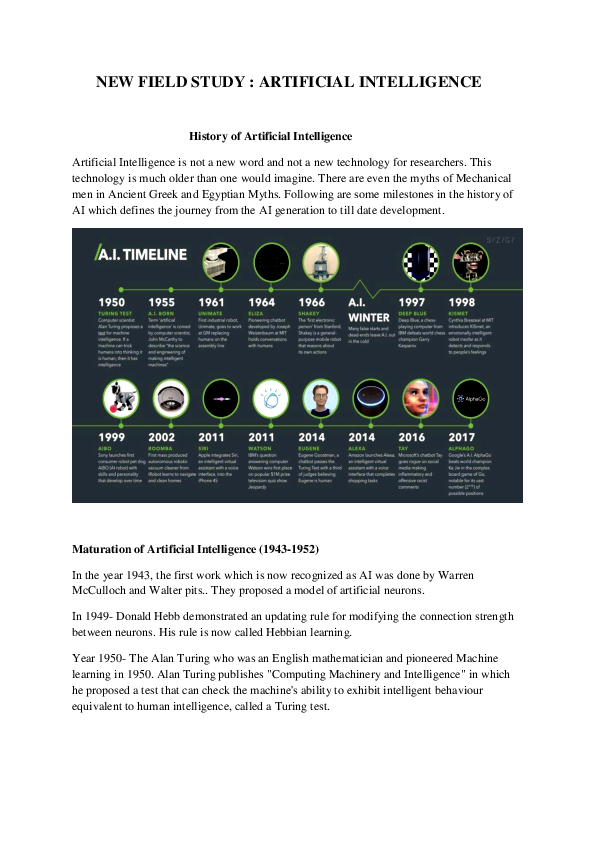
The Ethical Challenges of Artificial Intelligence in Information Security
The use of artificial intelligence in information security poses numerous complex challenges. Artificial intelligence allows systems to learn and develop from data and identify possible threats quickly and efficiently. However, there are challenges related to the development and use of these technologies in information security.
One of the key challenges is protecting the privacy and sensitive information of users. In an era where personal information is stored in computer systems and clouds, the importance of security on personal information rises. Artificial intelligence can be a powerful tool in identifying threats and attacks, but it may also rely on sensitive information that could be sent to third parties or used for unlawful purposes.
The second challenge is the need to improve the ability to identify new phenomena and incorporate them into artificial intelligence systems. As threats and attacks change and advance rapidly, it is important to develop and upgrade artificial intelligence tools to ensure continuous protection of information.
Additionally, dealing with the challenge of understanding the relationships between various data and information is necessary. Artificial intelligence may excel in identifying specific threats, but it is essential to understand the relationships between data to grasp the full picture and identify patterns and additional data that could hint at more sophisticated threats.
In conclusion, the ethical challenges of artificial intelligence in information security require extensive development and research to ensure the best and efficient protection of information and user privacy.
The Influence of Artificial Intelligence on the Education and Teaching Field
Artificial intelligence is a revolutionary technology that is changing the face of the world, and its influence extends to the education and teaching field. Today, most educational institutions use advanced technological tools based on artificial intelligence to improve teaching and learning processes.
One of the prominent advantages of artificial intelligence in education is the ability to analyze data and create patterns of personalized and more effective learning. Instead of teaching all students in the same way, artificial intelligence systems can adapt learning to each student according to their specific needs. This ensures that each student receives the best possible instruction tailored to them.
Technological development is the bridge to the future
Renat Cohen – Technology Manager
Additionally, artificial intelligence allows the implementation of innovative educational methods and the creation of fascinating learning environments. Teachers and educational institution managers can use advanced technologies to improve teaching processes, track student progress, and provide real-time feedback to each student.
Artificial intelligence also enables the development and implementation of new educational tools that give students analytical, problem-solving, and collaboration skills. The use of smart technologies like deep learning, automatic learning, and interactive learning can enhance students’ thinking and learning abilities, preparing them for the changing future.
In summary, artificial intelligence is an important tool in the field of education that allows for personalized learning experiences, improves teaching processes, and enhances students’ thinking and learning abilities.